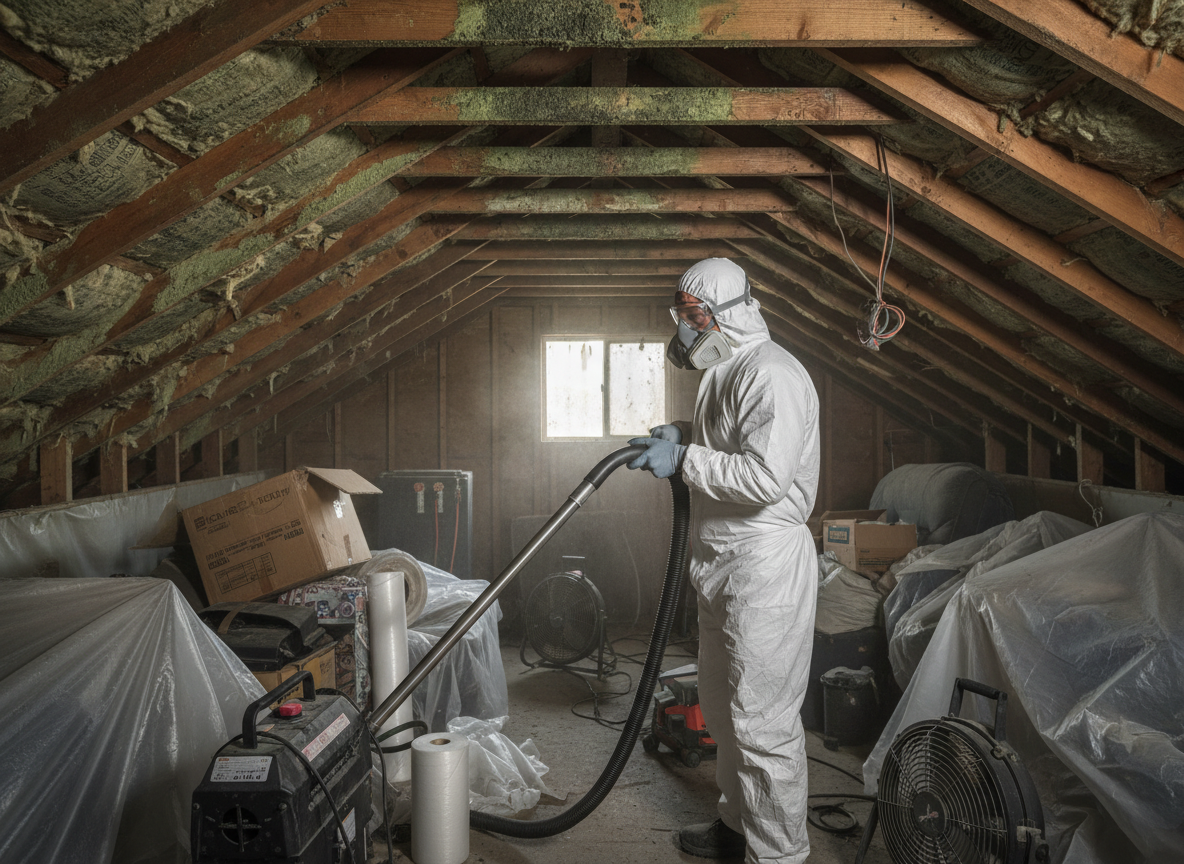
Reseda homes built after World War II often feature low-slope roofs and minimal ridge venting that trap humidity even during the Mediterranean climate's hot dry summers. When plumbing vents or evaporative cooler lines leak, moisture sits in fiberglass batts and on OSB sheathing for months before odors reach living spaces. Technicians must pull back insulation carefully to avoid disturbing spores that can drift into HVAC returns serving bedrooms below.
Access in these single-story stucco houses frequently requires cutting through textured ceilings in hallways rather than using pull-down stairs, which adds time and dust control steps. Los Angeles County building codes now require permits when more than 10 percent of attic insulation is removed, so crews document the affected square footage before starting. Negative air machines exhaust through windows facing side yards to keep neighbors at Westfield Topanga from noticing equipment.
Edge cases include mold growing on the underside of radiant barrier paper installed in the 1990s renovations common around Van Nuys and Woodland Hills borders. This material cannot be wiped clean and must be cut out in sections to prevent re-growth once temperatures spike again. Final clearance testing uses spore traps placed at multiple attic elevations rather than a single sample to confirm the source was fully addressed.
Technician insight
In Reseda, the thing that catches most people out with attic mold remediation is how the dry summers hide slow leaks from 1960s cast-iron vents until mold reaches the top plates of exterior walls facing Reseda Park, forcing extra containment work that homeowners never expect.
Slow Vent Leak in Reseda Attic
A homeowner near Lake Balboa reported a musty smell in upstairs closets. Inspection revealed a cracked plumbing vent soaking insulation above the master bedroom. Crews contained the space, removed wet materials, dried the sheathing, and confirmed clearance with multiple spore samples before reinstalling new insulation.
How it works
- 1
Initial Assessment
Technicians arrive within hours, inspect attic access points, and use moisture meters on sheathing while checking for active leaks from plumbing or roof vents.
- 2
Containment Setup
Plastic barriers and negative air machines isolate the attic from living areas, with exhaust directed outside to prevent spore migration into Reseda homes.
- 3
Removal and Cleaning
Affected insulation is bagged and removed, surfaces are HEPA vacuumed and treated, and any compromised radiant barrier sections are cut out.
- 4
Drying and Verification
Dehumidifiers run until wood moisture readings drop below 12 percent, followed by independent air sampling before barriers come down.
Pricing
Pricing varies by attic size, insulation depth, and whether active leaks require roof or plumbing coordination before remediation begins.