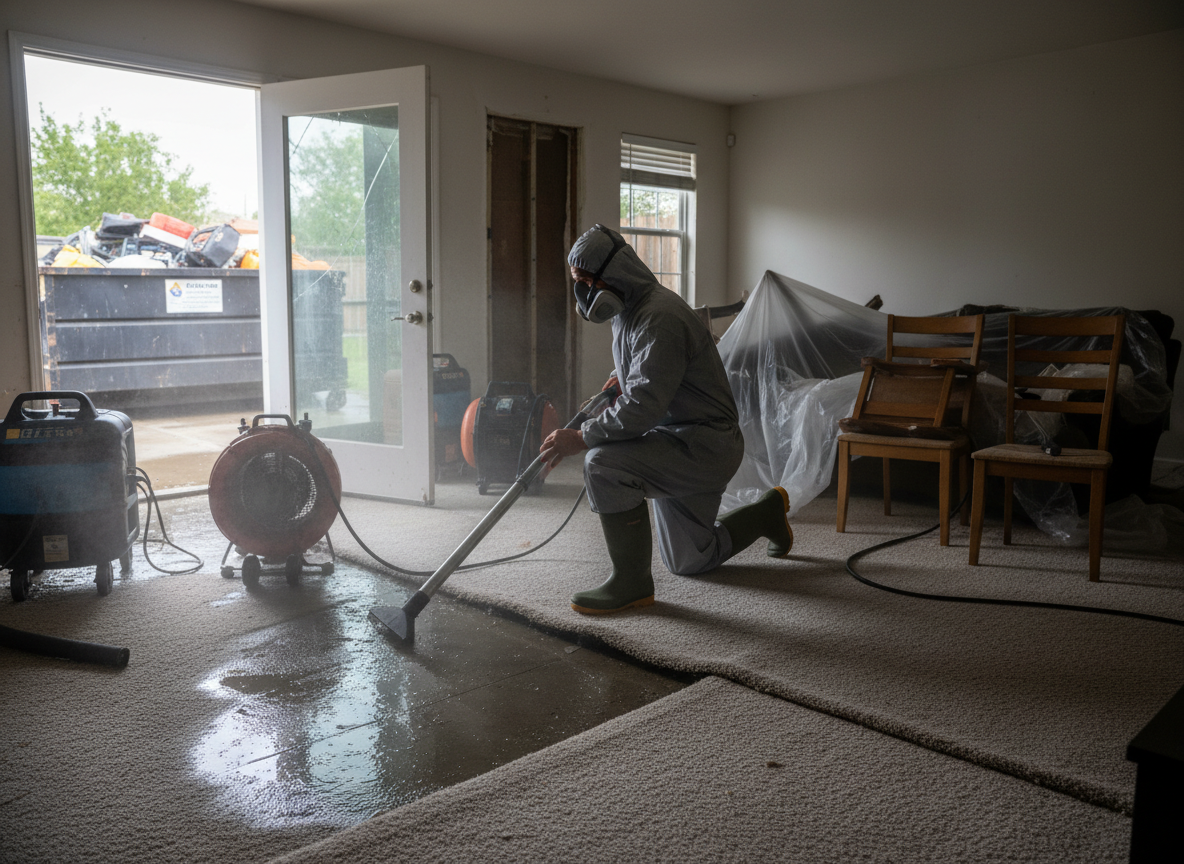
Emergency water cleanup in Reseda often starts with slab-on-grade homes built in the 1950s and 1960s that sit close to the water table around Lake Balboa. When a supply line bursts, water travels under the slab and wicks into drywall and base cabinets before residents notice. Extraction must reach the subfloor quickly because the hot, dry summers here pull moisture upward fast, leaving salts and residue that damage flooring adhesives. Crews use moisture meters on concrete to map migration paths that standard fans miss.
In neighborhoods west of Reseda Park and near Westfield Topanga, older stucco exteriors and flat roofs channel rainwater into wall cavities during rare but intense winter storms. Once inside, water follows electrical runs and insulation, creating hidden pockets that can reach neighboring units in duplexes common throughout Van Nuys and Woodland Hills. Technicians cut inspection holes at stud lines rather than guessing, then document every step for insurance adjusters who know Los Angeles County claims require clear moisture readings before drying equipment is removed.
After extraction, dehumidifiers run continuously because the Mediterranean climate keeps ambient humidity low most months yet traps moisture behind cabinets and under vinyl plank. Technicians return daily to check wood moisture content in subfloors, especially in homes where original oak flooring was installed directly over concrete. Skipping these checks leads to cupping that only appears weeks later when summer heat returns.
Technician insight
In Reseda the thing that catches most people out with emergency water cleanup is how quickly moisture travels under 1950s slab foundations once it finds a cold joint, especially in homes east of Reseda Park where the original plumbing runs right along the perimeter. Homeowners shut off the main valve and think the problem stops, but the water already under the concrete keeps wicking into the drywall for days.
Slab leak near Lake Balboa
A supply line failed under a 1962 Reseda home two blocks from Lake Balboa. Water had already traveled under the slab and into two exterior walls. We extracted standing water, placed drying equipment on the concrete, and returned daily to confirm moisture levels dropped below 12 percent before the homeowner could open walls for repairs.
How it works
- 1
On-site assessment
Technician arrives within the hour, maps water migration with meters, and identifies affected materials in Reseda homes.
- 2
Water extraction
Truck-mounted pumps and wands remove standing water from floors and carpets before it spreads to adjacent rooms.
- 3
Controlled drying
Air movers and dehumidifiers are placed based on daily meter readings to pull remaining moisture from walls and slabs.
- 4
Final verification
Moisture levels are rechecked and documented before equipment is removed and the space is released for repairs.
Pricing
Upfront quotes after inspection; cost depends on square footage affected, depth of water migration into slabs, and number of drying days required.