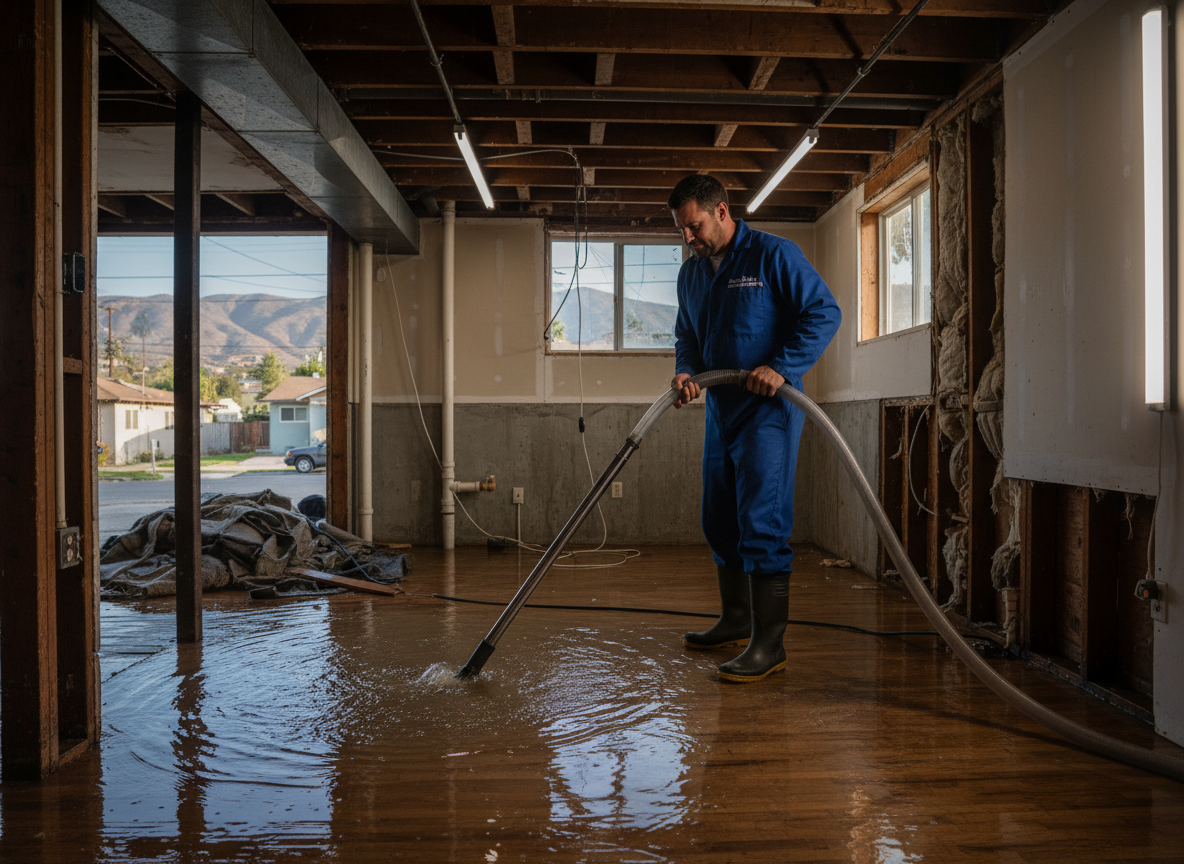
Water extraction in Reseda often starts in older single-story stucco homes built after the war, where slab foundations sit close to the ground. A burst supply line or overflowing washer in a garage can push water under cabinets and into the subfloor within minutes. Because Los Angeles County summers stay hot and dry, moisture evaporates from visible surfaces quickly but stays trapped beneath vinyl or laminate, creating hidden pockets that later feed mold growth along baseboards near Reseda Park.
Technicians use portable extractors with high-CFM ratings and weighted wands to pull water from carpet pad and hardwood without tearing up finished floors. In neighborhoods like Lake Balboa, where irrigation lines run close to property lines, a slow leak can saturate soil against the foundation and wick upward through stucco weep holes. We check for these patterns before starting, because pulling only the surface water leaves the slab damp and risks callbacks when humidity spikes during the rare winter rains.
Edge cases include water that reaches electrical outlets or HVAC returns in homes near Westfield Topanga. We isolate power first, then document moisture levels with meters before extraction to satisfy insurance adjusters who frequently review claims from Woodland Hills and Van Nuys. Skipping this step can turn a straightforward extraction into a full drywall removal job once the carrier sees elevated readings behind walls.
Technician insight
In Reseda, the thing that catches most people out with water extraction is how the flat lots along Victory Blvd let irrigation water pool against the slab for weeks before it shows up inside. Homeowners often mop the floor and think the job is done, but the moisture has already wicked under the base plate and started softening the particleboard cabinets.
Garage Leak After Washing Machine Overflow
Water from a failed washer hose spread across a concrete garage floor and into the adjacent laundry room in a 1950s Reseda home. We found standing water under the dryer pedestal and elevated readings in the drywall behind the sink. Extraction removed the free water, followed by targeted drying that kept the cabinets intact and avoided mold growth during the following hot, dry week.
How it works
- 1
Site Assessment
Walk the affected rooms, locate the water source, and map moisture migration into adjacent areas using meters.
- 2
Power Isolation and Safety
Shut off electricity to wet zones and set up containment to keep extraction water from spreading to dry rooms.
- 3
Standing Water Removal
Run truck-mounted or portable extractors across carpets, pads, and hard surfaces until no free water remains.
- 4
Drying Verification
Take follow-up moisture readings and place air movers if residual dampness is detected in subfloors or walls.
Pricing
Pricing depends on water volume, number of affected rooms, and whether subfloor drying is required; we provide upfront quotes after the initial assessment.