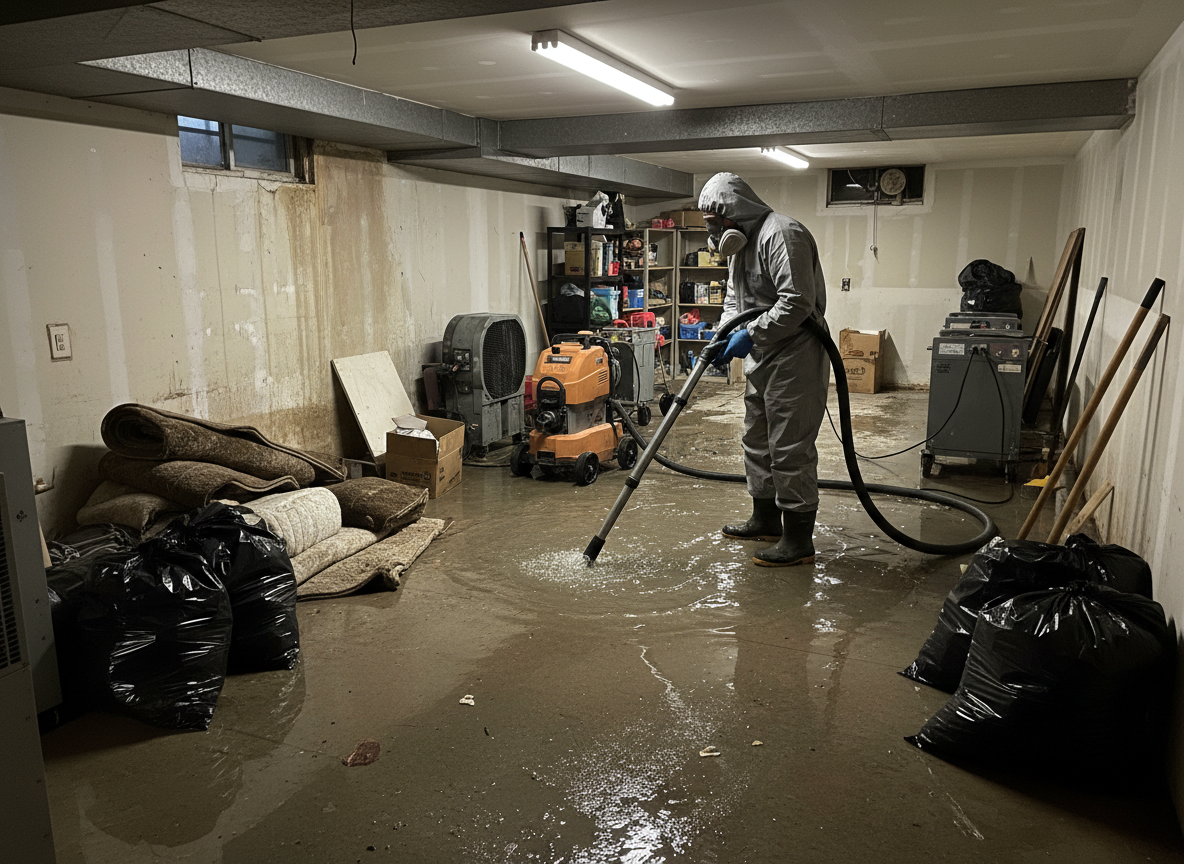
Reseda homes built in the 1950s and 1960s near Reseda Park often have shallow basements or below-grade storage areas that collect water when aging cast-iron pipes fail. Mediterranean climate means most of the year is dry, yet winter storms can deliver sudden heavy rain that overwhelms older French drains and sump systems, especially on the flatter terrain near Lake Balboa. Technicians must account for the clay-heavy soil that slows natural drainage and keeps moisture against foundation walls longer than in sandy areas of nearby Van Nuys.
After extraction, crews focus on hidden voids behind finished walls and under concrete slabs common in Westfield Topanga-adjacent neighborhoods. Edge cases include sewage cross-contamination from shared sewer lines in dense blocks and rapid mold growth once temperatures climb back into the 80s during spring. Los Angeles County building codes require permits for any structural drying that affects load-bearing elements, so documentation of moisture readings at multiple depths is standard before closing walls.
Equipment choice shifts with local conditions: high-velocity air movers are needed more than in coastal zones because low humidity helps speed drying once water is removed. Homeowners frequently overlook the space under stairwells or behind water heaters in utility basements, allowing residual moisture to migrate upward into living areas. Thorough removal of saturated insulation and baseboard prevents recurring issues that appear weeks later when summer heat returns.
Technician insight
In Reseda, the thing that catches most people out with Basement flood cleanup is the way older slab-on-grade homes near Victory Boulevard trap water against the foundation when the surrounding clay soil stays saturated after a winter storm, so the job often requires pulling baseboards and checking behind cabinets that sit directly on the concrete.
Pipe failure in Lake Balboa basement
A homeowner near Lake Balboa discovered water rising in a finished basement after an overnight pipe leak. Inspection showed water had wicked into drywall and under laminate flooring due to the home's 1960s foundation. Crews extracted the water, ran drying equipment for four days, and removed affected materials before mold could set in. The basement was returned to dry condition without further structural work.
How it works
- 1
On-site assessment
Technicians inspect the basement, identify water source, and map moisture extent using meters while noting foundation type and nearby drainage features.
- 2
Water extraction
Industrial pumps and vacuums remove standing water, followed by removal of heavily saturated materials that cannot be salvaged.
- 3
Drying and dehumidification
Air movers and dehumidifiers run continuously, with daily moisture checks to confirm drying progress in clay soil conditions.
- 4
Sanitizing and restoration
Affected surfaces receive antimicrobial treatment, followed by replacement of drywall, flooring, and fixtures as needed.
Pricing
Pricing varies with water volume, depth of saturation, and whether sewage is involved; 24/7 dispatch available from the Reseda location.