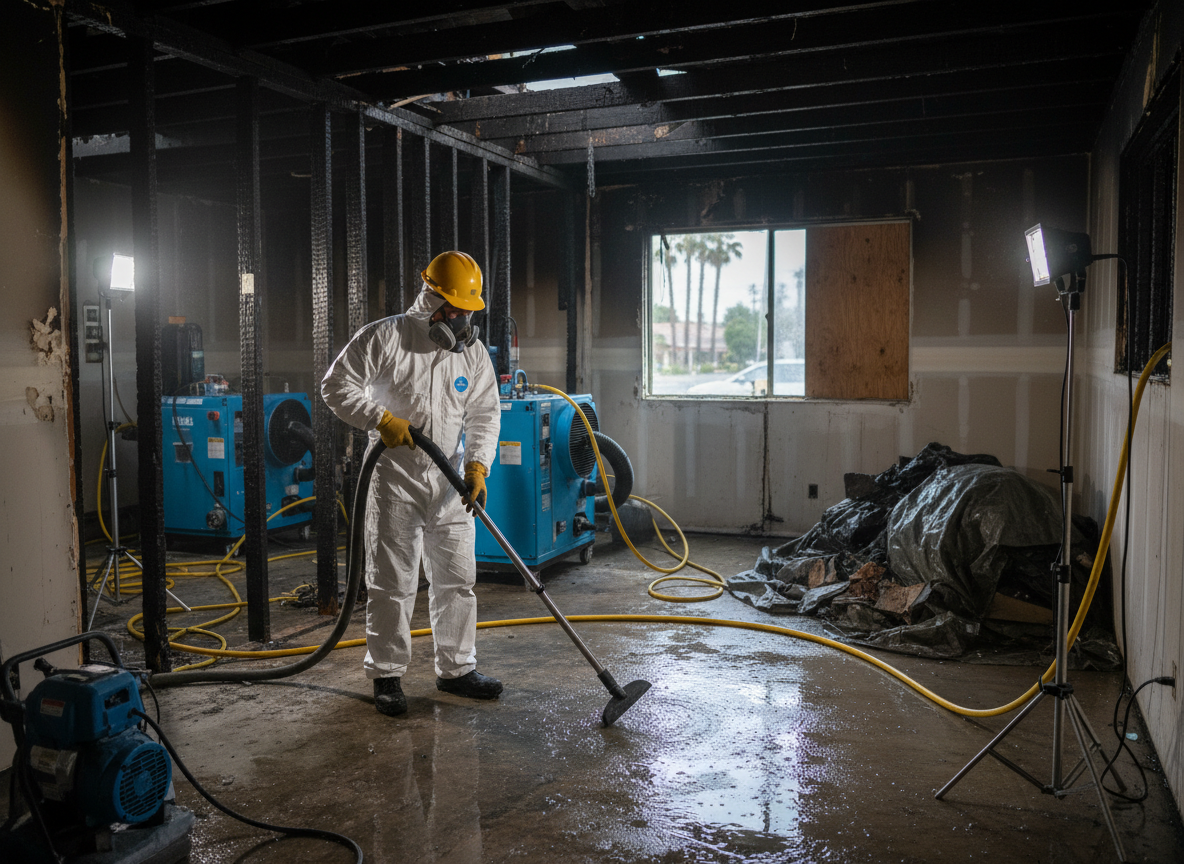
Fire suppression in Reseda often leaves standing water that soaks into older stucco and wood-frame homes built in the 1950s and 1960s around Reseda Park and Westfield Topanga. Hot dry summers accelerate mold growth once temperatures climb, while the Mediterranean climate means rapid evaporation on surfaces but trapped moisture behind walls and under slabs common in Lake Balboa properties. Crews must separate clean suppression water from contaminated runoff carrying soot and chemicals before drying begins.
Los Angeles County code requires full documentation of moisture levels in affected materials before any reconstruction. In Van Nuys and Woodland Hills homes, fire hoses frequently push water into crawl spaces and HVAC ducts where it mixes with insulation, creating hidden pockets that standard fans miss. Technicians use thermal imaging to map these zones because skipping them leads to recurring odors and structural softening weeks later.
After extraction, antimicrobial treatment targets both water and smoke residues that bond to drywall and framing. Summer heat demands faster dehumidification cycles to prevent secondary damage in single-story ranch homes typical throughout Reseda. Every job includes removal of saturated carpet padding and baseboards so hidden water along the foundation does not migrate into adjacent rooms.
Technician insight
In Reseda, the thing that catches most people out with water damage remediation after fire is how 1950s stucco homes around Reseda Park trap suppression water behind plaster and under slab-on-grade floors. The dry summer heat dries the surface fast but leaves pockets that later cause musty odors when fall humidity rises from the nearby Santa Monica Mountains.
Suppression water in Lake Balboa ranch home
A kitchen fire led to heavy hose use that pushed water under cabinets and into the crawl space. We found moisture readings above 30 percent in the subfloor extending toward the living room. Extraction, targeted drying, and antimicrobial application dried the structure within five days and prevented mold in the insulation.
How it works
- 1
Initial Assessment
Inspect all affected rooms, test moisture in walls and floors, and document water migration paths from fire suppression.
- 2
Water Extraction
Remove standing water and pull saturated materials while separating clean water from soot-contaminated runoff.
- 3
Drying and Monitoring
Place commercial air movers and dehumidifiers, then track daily moisture readings until levels return to normal.
- 4
Smoke and Residue Cleanup
Apply antimicrobial agents to surfaces and HVAC components to address combined water and smoke damage.
Pricing
Pricing depends on square footage affected, depth of water penetration, and whether smoke residue requires additional steps.